Port Charles – A new development in General Hospital is shifting the narrative around the recent shooting, as emerging clues suggest the truth behind the incident may be far more complex than initially believed.
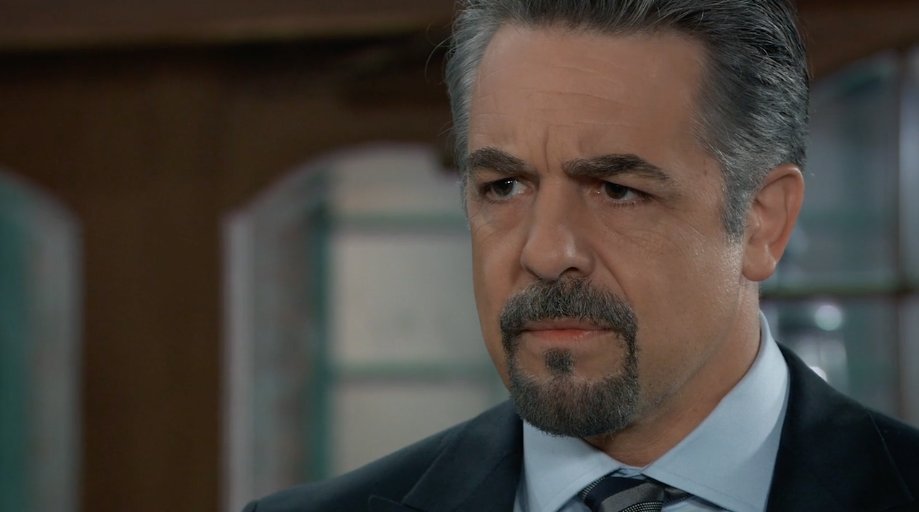
At the center of the speculation is Jason Morgan, long considered the most likely suspect in the attack on Ross Cullum. However, recent analysis points to inconsistencies in Jason’s behavior—raising questions about whether his apparent guilt is genuine, or part of a deliberate effort to conceal a deeper truth.
A Detail Others Missed
Attention has now turned to Jack Brennan, whose investigative instincts may have uncovered a critical detail overlooked by others. According to the theory gaining traction, Brennan identified a discrepancy in the sequence of events—specifically, a moment in which Jason appeared to hesitate despite having both the opportunity and positioning to act.
For a figure known for precision and decisiveness, that hesitation stands out. Rather than signaling uncertainty, it may indicate a conscious choice.
A Different Interpretation of the Shooting
If Jason did not fire the shot, the question becomes: why would he allow himself to be implicated?
One possible answer centers on Rocco Falconeri. The theory suggests that Rocco may have been involved in the shooting—intentionally or otherwise—and that Jason stepped in to shield him from the consequences. Such a move would align with Jason’s established pattern of protecting others, even at great personal cost.
This interpretation reframes the entire incident. Instead of a failed act or a misfire, the moment becomes a calculated sacrifice—one designed to redirect blame and contain the fallout.
Leverage and Silence
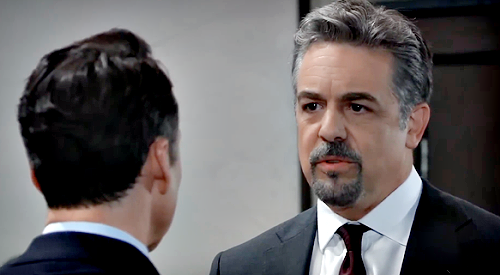
What makes the situation more volatile is Brennan’s response. Rather than exposing the potential truth, he appears to be holding onto the information. In the world of Port Charles, silence can be more powerful than revelation.
If Brennan has indeed connected Jason to a cover-up involving Rocco, the information becomes leverage—particularly against Valentin Cassadine and his daughter, Charlotte Cassadine. By controlling when and how the truth surfaces, Brennan could force key players into difficult decisions, reshaping alliances in the process.
A Story No Longer About the Shooter
The focus of the storyline may now be shifting away from identifying the shooter and toward understanding the motive behind the silence. If Jason knowingly accepted blame, the implications extend beyond a single act—they point to a broader effort to protect someone vulnerable at the center of the crisis.
At the same time, Brennan’s decision to withhold what he knows introduces a new layer of tension. The truth, rather than resolving the situation, may instead become a strategic tool in an increasingly complex power struggle.
What Comes Next
As the investigation evolves, one question continues to dominate: was Jason’s hesitation a mistake—or a deliberate act to prevent something worse?
If the emerging theory proves accurate, the shooting will no longer be remembered as a straightforward crime, but as a turning point defined by sacrifice, secrecy, and the quiet transfer of power.
And in Port Charles, those are the kinds of moments that rarely stay buried for long.