On General Hospital, the most dangerous clues are often the ones placed right in plain sight. And right now, one seemingly simple moment has viewers questioning everything they thought they understood about the crash.
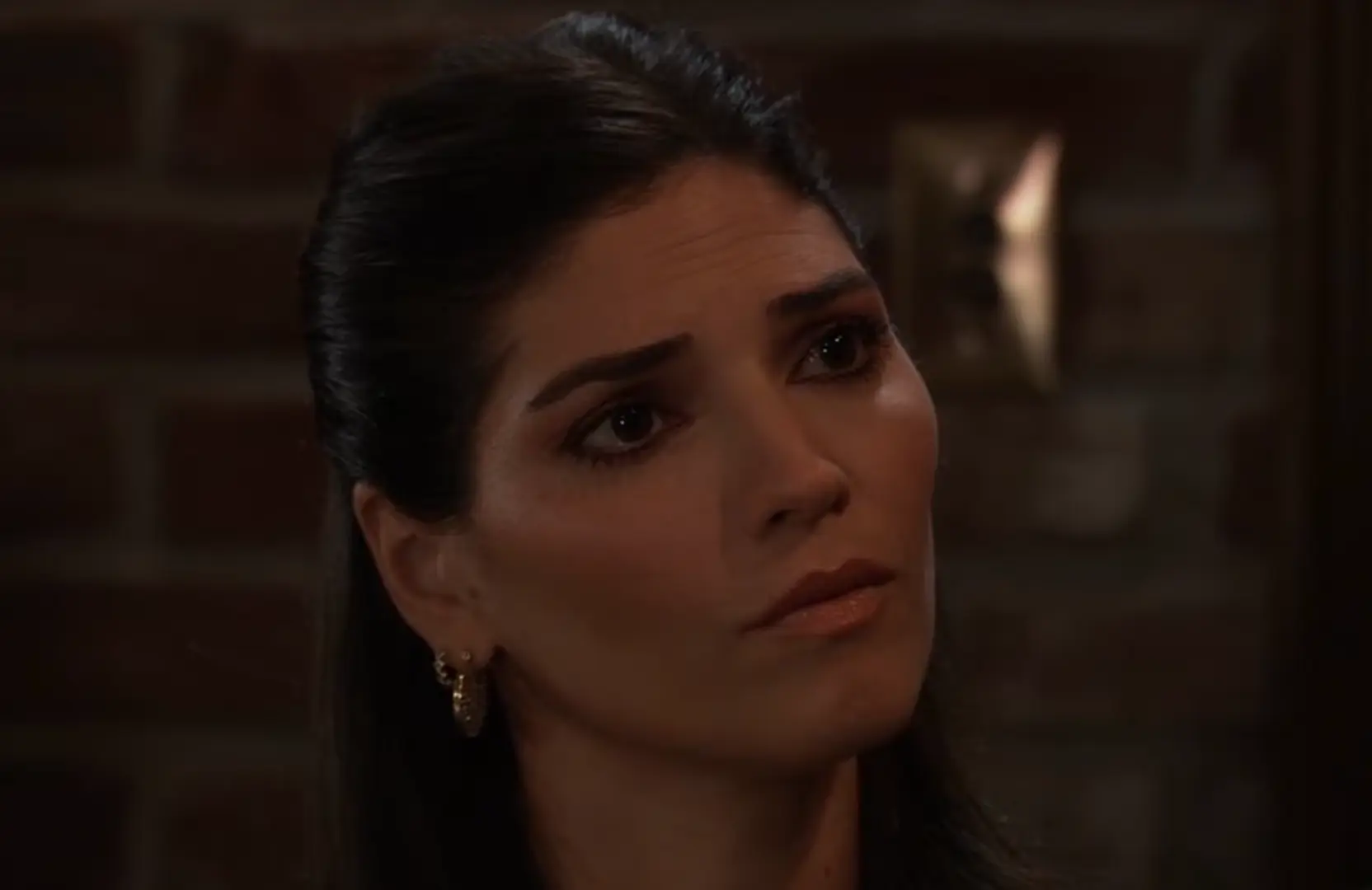
At the center of the speculation: Brook Lynn Quartermaine—and a glass of wine the camera made sure no one would miss.
The Shot That Sparked Suspicion
It wasn’t just that Brook Lynn had a drink. It was how the scene was framed.
The camera lingered. Not briefly, not incidentally—but deliberately. The wine glass, the bottle, the implication of timing all became focal points. In a genre where visual emphasis often signals narrative importance, that kind of attention rarely comes without purpose.
The question isn’t whether the moment mattered.
It’s why the show wanted the audience to notice it so clearly.
Behavior That Didn’t Add Up
Brook Lynn’s actions immediately following the scene only fueled the speculation.
She didn’t leave calmly—she rushed out. And when she later appeared at Charlie’s, something felt off. She was late. She seemed unsettled. Her composure didn’t match the situation she walked into.
For many viewers, that disconnect raised a critical question: was she reacting to something she caused… or something she knew?
That distinction may ultimately define her role in what happened.

A Chain Reaction Theory Emerges
Among the more compelling theories circulating is the idea that Brook Lynn didn’t directly cause the crash—but may have triggered it.
In this scenario, a brief moment on the road—perhaps a sudden swerve or hesitation—forces Jordan Ashford to react. Already distracted with Curtis Ashford, Jordan may not have had the time or focus to recover.
What follows is not a single mistake, but a sequence. One reaction leads to another. Other drivers—possibly including Charlotte Cassadine—become part of the unfolding chaos.
No direct collision. No clear evidence.
Just one moment that spirals into many.
Shared Responsibility—or Perfect Storm?
Of course, the theory does not exist in isolation.
Jordan and Curtis were visibly distracted. That alone introduces a clear and immediate risk factor. In that sense, the crash could still be explained without introducing a third party.
But what if both elements are true?
What if Brook Lynn’s presence on the road intersected with Jordan’s distraction at precisely the wrong moment? Not a single cause, but a convergence—two separate mistakes colliding into one unavoidable outcome.
Red Herring or Hidden Truth?
There is, however, another possibility—one that longtime viewers of General Hospital will recognize immediately.
The wine scene may be too obvious.
In soap storytelling, when the narrative points this directly at a detail, it often serves as misdirection. A red herring designed to focus attention in one direction while the real answer remains elsewhere.
If that’s the case, Brook Lynn’s suspicious behavior may not indicate guilt—but rather positioning. A setup for doubt, not confirmation.

The Stakes Couldn’t Be Higher
Regardless of intent, the implications for Brook Lynn are significant.
If she played any role—intentional or not—the fallout could extend far beyond the crash itself. Her future, her relationships, and her standing in Port Charles could all be at risk.
Even the possibility of involvement is enough to shift how others see her.
Because in this world, perception can be just as damaging as truth.
A Mystery Still Unfolding
At this stage, the crash remains unresolved—not just in terms of cause, but meaning.
Was the wine glass a clue? A warning? Or a carefully planted distraction?
For now, Brook Lynn remains at the center of the question, whether as catalyst, suspect, or narrative decoy. And until the full picture comes into focus, every detail—no matter how small—will continue to carry weight.
Because in Port Charles, the difference between truth and misdirection often comes down to a single moment the audience was never supposed to ignore.