In the high-octane world of Formula 1, retirements can be as bizarre as they are heartbreaking. From mechanical failures to unexpected health issues, the sport has seen its fair share of strange exits. This article delves into some of the weirdest retirements in F1 history that left fans and teams in disbelief.

One of the most memorable oddities occurred during the 2004 Japanese Grand Prix when Mark Webber retired due to a loose cockpit fixing. Hot air from the engine seeped into his seat, causing him severe discomfort. This incident highlights how even minor technical issues can lead to significant consequences in a race.
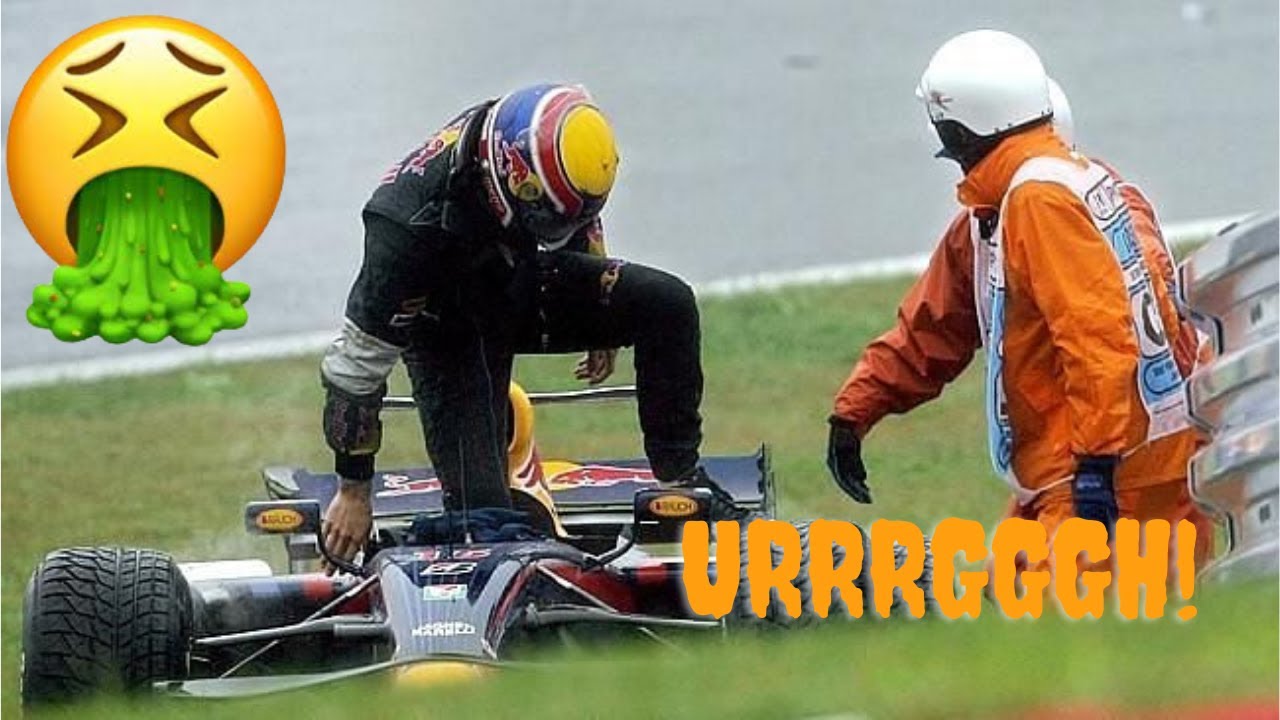
Webber’s misfortune didn’t end there. Just a day before the 2007 Fuji race, he suffered from food poisoning. Despite his condition, he persevered until a collision with Sebastian Vettel ended his race. This showcases the resilience of drivers, who often push through physical challenges only to face unexpected setbacks.
In the 2010 Shanghai GP, Sebastian Buemi experienced a catastrophic failure when both front wheels detached simultaneously due to a design flaw in his Toro Rosso car. This incident underscores the importance of rigorous testing and reliability in F1 engineering, as a single oversight can lead to disastrous outcomes.

Yuki Tsunoda’s retirement at the 2022 Dutch GP was equally bizarre. After a routine pit stop, he was called back to the pits, leading to confusion about whether the car was sabotaged or malfunctioned. This incident raises questions about team communication and the potential for unforeseen issues during pit stops.
Valtteri Bottas faced a notorious pit stop blunder at the 2021 Monaco GP when a stuck wheel nut prevented him from leaving the pits. This moment not only cost him a potential podium but also illustrated how critical pit stop efficiency is to race strategy.
Kimi Räikkönen’s retirement during the 2005 Nürburgring GP was another case of bad luck. Leading comfortably, he suffered a suspension failure that ended his race. This incident highlights how unpredictable mechanical failures can be, even for the best-performing cars.
Ferrari’s infamous double retirement at the 1995 Italian GP is a classic example of misfortune. Both cars were in contention for a podium when a bizarre sequence of events led to their simultaneous failures. This incident serves as a reminder that even the most dominant teams can falter under pressure.
In 2004, Olivier Panis experienced an unexpected retirement when the fireproof foam in his drink bottle exploded, obscuring his vision. This peculiar malfunction exemplifies how safety equipment can sometimes backfire, leading to unforeseen retirements.

Logan Sargeant’s struggles during the 2023 Qatar GP illustrate the physical toll of racing in extreme conditions. Dehydration and illness forced him to retire, showcasing the human limits that drivers encounter in their pursuit of victory.
Finally, Nigel Mansell’s infamous stall during the 1991 Canadian GP demonstrates how mental lapses can lead to dramatic retirements. Despite commanding the race, his overconfidence resulted in a missed victory, reminding fans that even the best drivers are not immune to error.
These odd retirements reveal the unpredictable nature of Formula 1, where technical failures, human error, and sheer bad luck can all play a role in a driver’s fate. As the sport evolves, teams must remain vigilant to avoid the strange pitfalls that can derail their championship hopes.