Aston Martin has finally crossed a significant milestone at the Japanese Grand Prix, with Fernando Alonso finishing in 18th place—an achievement that belies the struggles of the 2026 season. After failing to complete any races prior, this result offers critical data and a glimmer of hope for the beleaguered team.

The Suzuka race marked a turning point, albeit a modest one, for Aston Martin. Until now, the AMR26 had been plagued by severe vibration issues, preventing drivers from completing race distances. Alonso’s finish, though far from competitive, provided essential insights into the car’s performance and operational challenges.
The vibrations have been so intense that they raised concerns about potential nerve damage for the drivers. Both Alonso and Lance Stroll reported discomfort, leading to questions about the car’s usability rather than just its speed. This situation has drawn considerable attention, especially given the high expectations surrounding Aston Martin’s partnership with Honda and the expertise of Adrian Newey.
The root of the vibration issue is still under investigation, but it seems closely tied to the power unit’s integration with the AMR26 chassis. Honda has suggested that the vibrations are amplified when the engine is installed in Aston Martin’s car, complicating the diagnosis. This discrepancy in perspectives has led to speculation about tensions between the two entities, which Aston Martin has publicly denied.

Pre-season testing was inadequate for Aston Martin, leaving them ill-prepared for the season’s challenges. While competitors accumulated vital data, Aston Martin struggled with basic systems checks, causing the vibration problem to escalate without a clear understanding. This has forced the team into a reactive development cycle, making it difficult to implement immediate solutions.
During practice at Suzuka, Aston Martin tested a new component designed to mitigate vibrations, which Alonso reported as significantly improving the car’s feel. However, the team opted not to race with it due to reliability concerns, highlighting the precarious balance between innovation and the need for stability in competition.

The decision to remove the experimental component before qualifying raised questions about the team’s strategy. Despite the confusion, Alonso’s finish provided a complete race data set, crucial for understanding the car’s performance. Team officials acknowledged that this milestone was essential for future development.
As the Formula 1 calendar now includes a break before the Miami Grand Prix, Aston Martin has time to analyze the data collected at Suzuka. Chief trackside officer Mike Krack expressed cautious optimism, suggesting that the team could make significant progress by the next race.
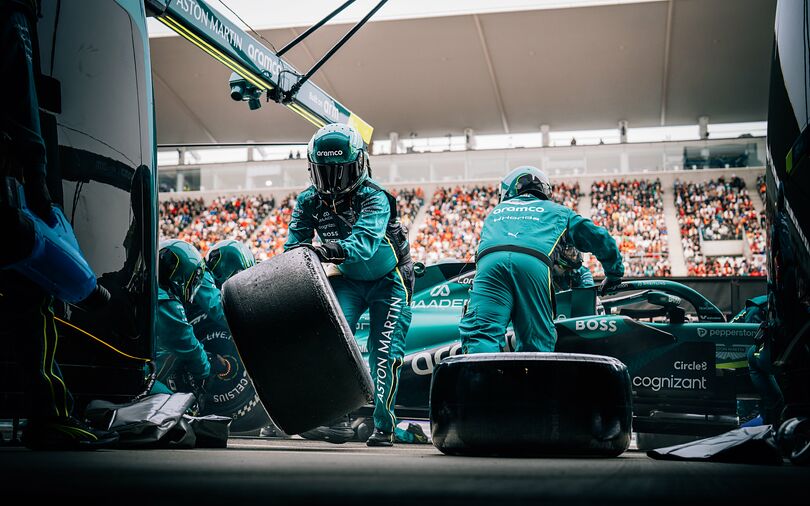
While the Suzuka race may not have been a victory in the traditional sense, it could represent the first step toward resolving the AMR26’s persistent issues. The team must focus on stabilizing the car and ensuring it is predictable for drivers, which is critical for any performance gains.
The road ahead remains challenging, as solving the vibration issue is only the beginning. Performance improvements will be necessary for Aston Martin to escape the back of the grid. The coming weeks will be pivotal in determining whether this small breakthrough can lead to a more competitive future.
The question remains: Can Aston Martin capitalize on the momentum from Suzuka, or is this merely a temporary reprieve from deeper technical challenges? The motorsport community watches closely as the team navigates this critical juncture in their season.