Nearly a decade after his high-profile clash with Drake, Meek Mill is pushing back against the long-standing narrative that his career never fully recovered. In a series of recent comments online, the Philadelphia rapper made it clear that, from his perspective, the numbers tell a very different story.
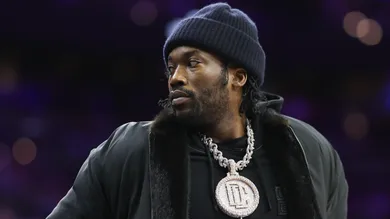
The renewed debate began after remarks from media personality Charlamagne Tha God, who suggested that while Meek remains respected, his momentum — particularly on social media — has not been the same since the 2015 feud. Meek responded directly, using the moment to highlight his financial success over the years since the conflict.
“You spoke like a battle ended me,” Meek wrote, disputing the idea that the Drake feud derailed his trajectory. He went on to claim that he has earned approximately $80 million since 2015, adding that he continues to generate significant income from music alone, with millions more reportedly expected in the near term.
The feud in question dates back to 2015, shortly after the two artists collaborated on “R.I.C.O.” from Meek’s album Dreams Worth More Than Money. Meek publicly accused Drake of using ghostwriters, prompting a rapid escalation that included diss tracks — most notably Drake’s “Back to Back,” which became a defining moment in the battle and widely shifted public perception at the time.
For years, critics and online commentators have pointed to that exchange as a turning point in Meek Mill’s career. However, the rapper now argues that such claims ignore his continued commercial success. In addition to his financial statement, Meek cited multiple platinum-certified records released after the feud, including tracks like “Going Bad,” “All Eyes On You,” and “What’s Free,” as evidence that his catalog has remained impactful.
Beyond music, Meek also emphasized that his brand extends further than public opinion on social media, suggesting that his real-world success is not accurately reflected by online narratives. He also pushed back on Charlamagne’s criticism, arguing that the radio host is not in a position to assess the full scope of his career.

To be fair, Charlamagne’s comments were not entirely negative. He acknowledged Meek’s contributions to his community and praised his work with criminal justice reform initiatives, while also suggesting that the rapper might have benefited from stepping away from social media during the height of the feud.
Still, Meek’s response underscores a broader point: the difference between perception and reality in the digital age. While the Drake battle may remain a defining cultural moment, Meek Mill is making the case that it did not define his career — at least not in the way critics have suggested.
As the conversation continues, one thing is clear: nearly ten years later, the impact of that feud is still being debated, but Meek Mill insists his success since then speaks for itself.