Ferrari has shocked the Formula 1 world with a revolutionary front wing design on the SF-26 that challenges every aerodynamic convention. This seemingly simple, minimalist approach could upend the entire 2026 grid, radically altering development strategies with its unprecedented focus on flow control, stability, and long-term evolution.
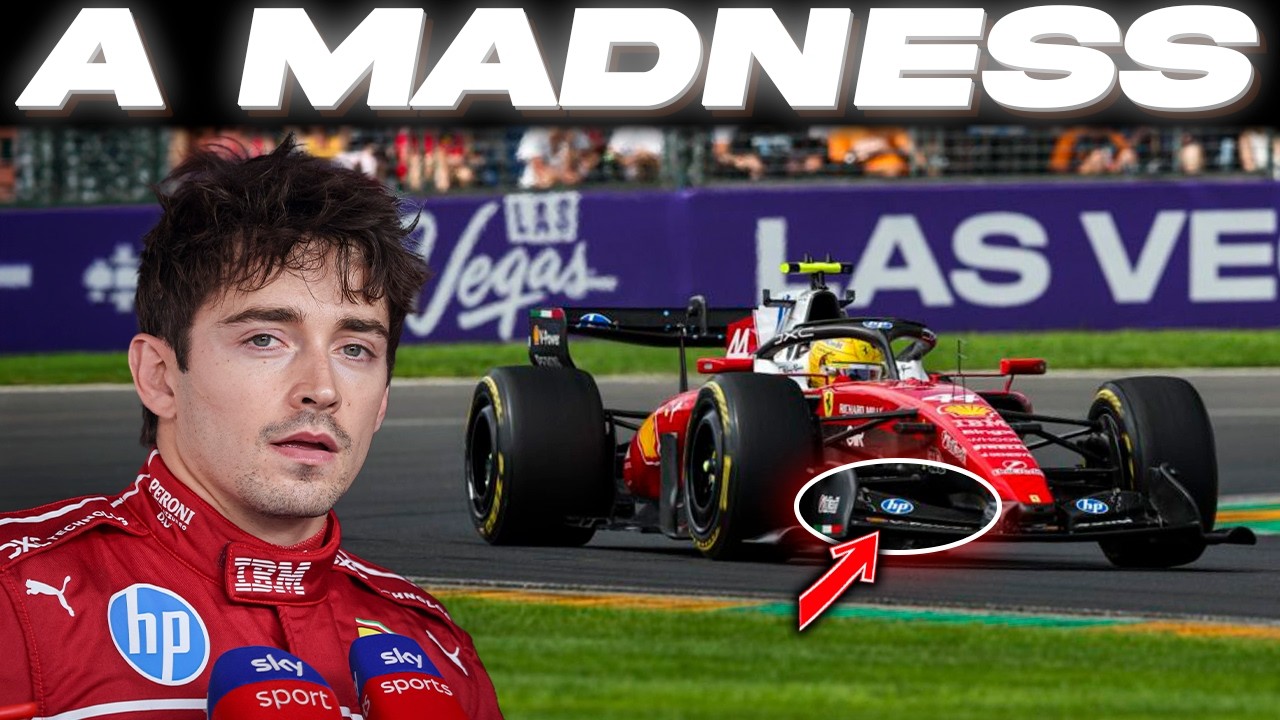 While the F1 world fixates on evident 2026 changes, Ferrari quietly pushes a stealth revolution. Unlike competitors complicating front wings, Ferrari’s SF-26 sports a simplified wing that defies established formulas. This design isn’t just a mechanical alteration; it represents a profound philosophical shift towards mastering aerodynamic flow rather than chasing immediate downforce.
This new front wing’s genius lies in its precision adjustable flaps near the edges, enabling the team to fine-tune aerodynamic load where it matters most—corner by corner—without disrupting the central airflow feeding the car’s underbody. This surgical control promises unprecedented predictability in the car’s behavior through varying conditions.
Ferrari’s strategic choice to simplify rather than complexify has shocked insiders who see this as a masterstroke rather than a mistake. By focusing on a stable aerodynamic base instead of short-term gains, Ferrari aims to dominate through superior development, evolving its car more efficiently than rivals scrambling for quick fixes.
The ripple effects are immense. Stabilizing flow to the ground optimizes the floor’s load generation, creating a harmonious aerodynamic system. The result? A car with a wide operating window—performing consistently from lap one to the final lap, regardless of track layout or temperature changes, a feat rarely seen in modern F1.

The innovation doesn’t stop at the wing. Ferrari’s front suspension incorporates marked anti-dive geometry, maintaining a stable chassis platform under braking. This reduces disruptive height and angle changes, safeguarding the delicate airflow Ferrari’s wing generates, and ensuring stable aerodynamic performance in dynamic race conditions.
Together, the front wing and suspension form a cohesive aerodynamic puzzle. Clean airflow, steady platform, and an optimized floor combine to build an integrated system. This systematic thinking marks a departure from traditional piecemeal upgrades toward a holistic, evolving concept that could set a new F1 standard.
This approach sets Ferrari apart in the fiercely uncertain 2026 regulatory landscape. While other teams chase elusive quick gains, Ferrari prepares to exploit a solid, predictable aerodynamic foundation. The ability to refine aerodynamics without compromising stability might yield exponential performance growth as the season unfolds.

Paddock insiders now whisper about an impending seismic shift. Ferrari’s front wing is not designed for a single-lap burst but for race-long dominance and adaptability. This could force competing teams into an aerodynamic arms race mid-season—an almost impossible turnaround without sacrificing current performance.
Yet the gamble is colossal. If Ferrari’s system fails to deliver sufficient downforce or if airflow is disrupted on track compared to simulations, the entire concept risks collapse. The tight integration means any flaw could negate the advantages, making this not just innovation but one of the boldest technical risks in years.
Still, Ferrari has consciously rejected safe, incremental evolution. This front wing embraces a long view—sacrificing immediate spectacle for ultimate control over flow, stability, and development pace. If successful, this will redefine how Formula 1 teams engineer race cars in the era of ground-effects resurgence.

Should Ferrari’s bet pay off, its rivals will face a near-impossible challenge: redesigning aerodynamic philosophies mid-season against a car that evolves faster and behaves more consistently. The SF-26 could become the template for 2026 and beyond, a marker for the sport's next technological epoch.
The stakes have never been higher. This is not merely a styling choice or subtle tweak but the blueprint of a new aerodynamic paradigm. Ferrari’s front wing could simultaneously be the dawn of a dominant era or the most catastrophic overreach the sport has witnessed in decades.
As the 2026 season approaches, all eyes will track not just laps but how this philosophy withstands real-world conditions. Ferrari’s silent revolution has begun, and its front wing stands as both a promise and a warning to all who dare to challenge its flow—ushering in a Formula 1 era defined by invisible mastery.
https://www.youtube.com/embed/0A0JCkSaG1c