Ferrari is set to unveil a groundbreaking improvement for the Miami Grand Prix, potentially gaining up to half a second per lap without increasing engine power. This revolutionary advancement in blown exhaust technology could dramatically shift the dynamics of Formula 1, positioning Ferrari as the team to beat this season.
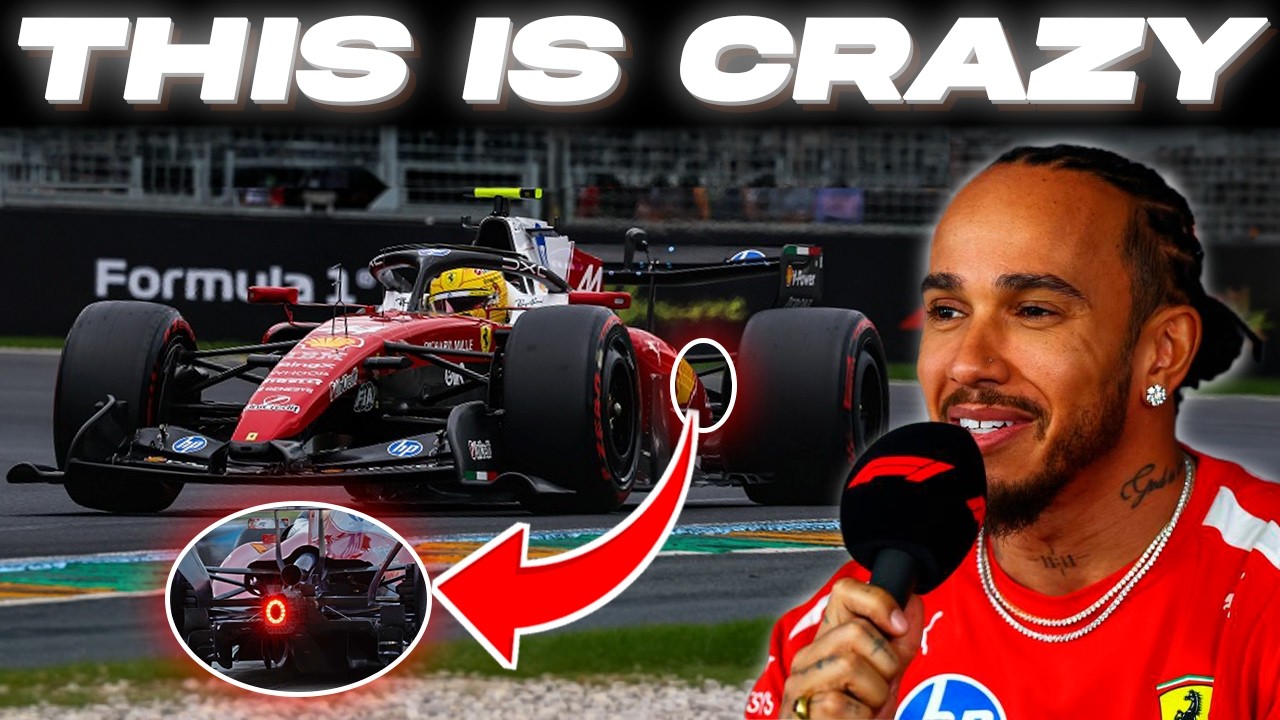
In a season marked by fierce competition, Ferrari’s latest innovation has the potential to redefine the balance of power within the grid. The Scuderia has perfected a system that utilizes exhaust gases in a way that no other team has successfully executed. This strategic enhancement is not merely an incremental upgrade; it represents a significant leap in aerodynamic efficiency.
The key to Ferrari’s advantage lies in their FTM system, which cleverly redirects exhaust flow to boost downforce without sacrificing straight-line speed. This breakthrough allows for a harmonious balance that has eluded competitors, making the SF26 a formidable contender on circuits like Miami, known for its demanding layout.
Ferrari’s decision to sacrifice some engine power for an optimized exhaust flow configuration is beginning to pay dividends. While early races did not yield immediate results, the team’s long-term vision is now coming into focus. The Miami Grand Prix is viewed internally as a pivotal moment, a potential turning point in their championship quest.

The implications of this technology extend beyond mere lap times. By enhancing traction and stability, Ferrari could maintain consistent performance throughout the race, managing tire wear and pace more effectively than rivals. This is crucial in modern Formula 1, where race strategy can often outweigh outright speed.
As competitors like Mercedes and McLaren focus on traditional performance areas, Ferrari’s unique approach may grant them a silent, yet substantial edge. The challenge for other teams lies not only in replicating this system but in fully understanding the intricate architecture that supports it.
Should Ferrari’s system perform as anticipated under race conditions, it could create a domino effect, allowing them to build a lead that is difficult for others to counteract. The Miami circuit, with its combination of slow corners and long straights, presents an ideal environment to showcase these advantages.

However, this risk comes with inherent challenges. The reliance on this new system places immense pressure on Ferrari’s engineers to ensure reliability and adaptability in varying track conditions. Any deviation could jeopardize their competitive edge, turning a promising advantage into a liability.
Miami is not just another race; it is a critical test of Ferrari’s bold technical gamble. The outcome will reveal whether they have indeed discovered a game-changing advantage or if their strategy falls short under real-world pressures.

If successful, this evolution could signal the dawn of a new era in Formula 1, where Ferrari reclaims its status as a dominant force. The rest of the grid may find themselves scrambling to adapt, potentially altering the course of the entire season.
Ultimately, Ferrari’s innovation is more than a technical upgrade; it represents a philosophical shift in how performance is generated in Formula 1. As they prepare for Miami, all eyes will be on the SF26, eager to see if this daring strategy pays off.
In the high-stakes world of F1, moments like these can redefine hierarchies. If Ferrari’s gamble pays off, it could pave the way for a series of victories that reshapes the championship landscape. The Miami Grand Prix is poised to be a defining moment, where innovation meets reality on the racetrack.