A new wave of CT scan analyses has thrust the infamous “Nazca mummies” back into global headlines — and what researchers are finding is astonishing, bewildering, and deeply controversial.
While the specimens were initially presented as non-human, alien-like beings discovered near the Nazca Lines in Peru, the latest scans have uncovered anatomical features and internal structures that no one can immediately explain — on either side of the debate.
Instead of resolving the mystery, the scans have ignited an international scientific firestorm.
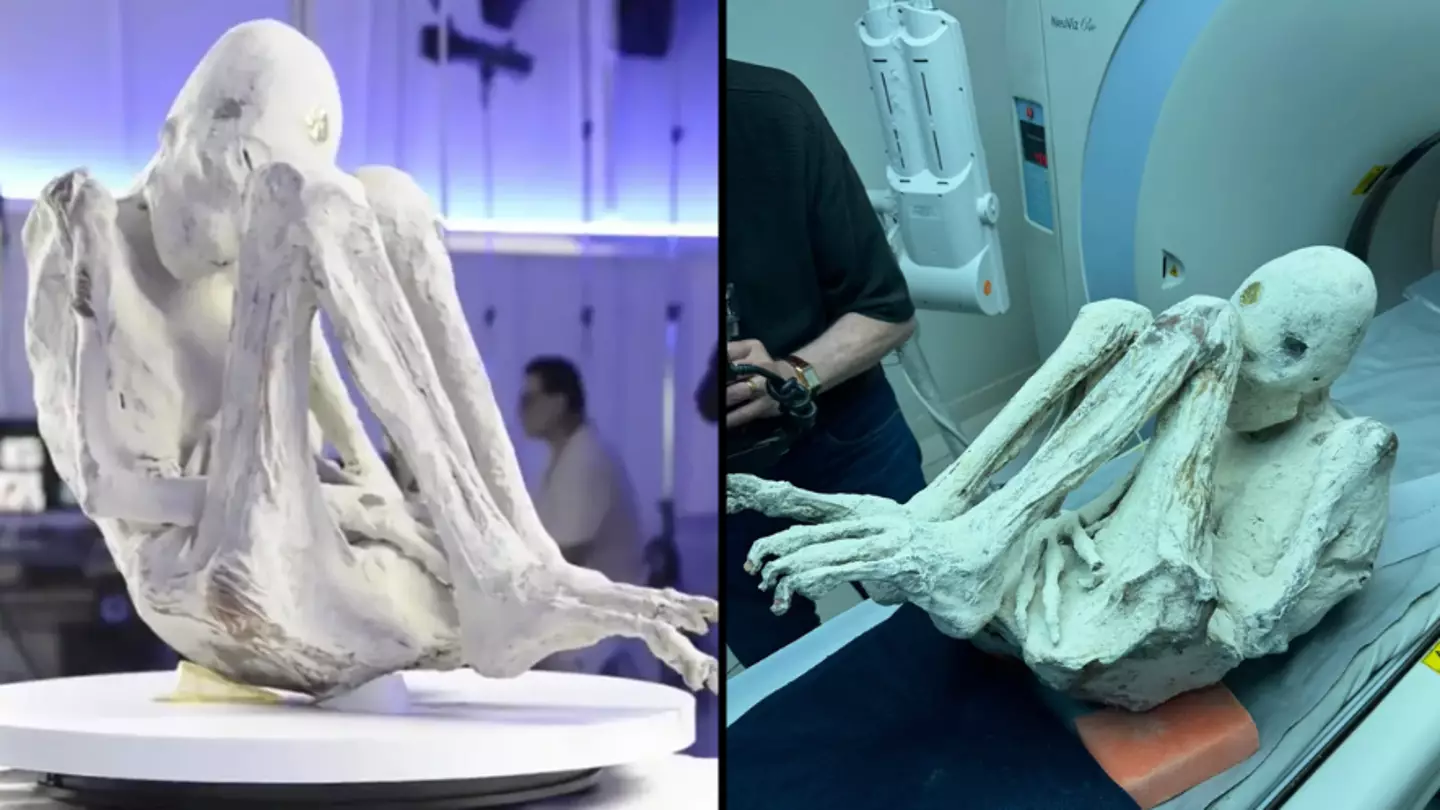
 🏺 The Specimens: Long Skulls, Three Fingers, Tiny Bodies
The bodies — including the widely publicized figures dubbed “María” and “Josefina” — show:
-
Elongated cranial vaults
-
Three long fingers on each hand
-
Unusual rib configurations
-
Compact, contorted skeletal postures
To the untrained eye, the CT scans look like something out of science fiction.
To experts, however, the images raise even more complicated questions.
 🔬 CT Scans Reveal Startling — and Conflicting — Anatomical Clues
When imaging specialists examined the bodies, they found:
✔ Anatomical structures consistent with real bone
—even in areas that seem “inhuman,” such as the long fingers.
✔ Evidence of fractures, cuts, and bone reassembly
Some bones appear reshaped or repositioned, suggesting manipulation.
✔ Foreign materials inside the bodies
Including plaster-like substances, inconsistent with natural mummification.
✔ Metal pieces embedded within the remains
But their purpose and age remain unclear.
These findings left many scientists stunned — not because the bodies appear extraterrestrial, but because the construction is far more complex than previously believed.
 ⚠️ Scientists Clash: Hoax or Undocumented Ancient Practice?
Peruvian authorities assert the bodies are forgeries, assembled from human and animal bones and covered with artificial material.
Independent bioanthropologists support this view, citing:
-
mismatched bones,
-
modified joints,
-
inconsistent proportions,
-
and modern adhesives.
But the team promoting the discoveries insists the CT scans reveal intentional biological design, not crude fakery.
Their arguments:
• “The bone density matches natural origins.”
• “Fusion points and internal architecture look deliberate.”
• “No known human culture produced bodies like these.”
This sharp division has left the scientific world in turmoil.
 🧬 DNA Results Add Fuel to the Fire
Samples analyzed by multiple labs show:
-
Human DNA present in many tissues
-
Contamination from modern handling
-
Fragments that do not match known genomes —
though experts warn that degraded or contaminated DNA often produces ambiguous reads.
Supporters interpret this as evidence of a new species.
Skeptics argue it’s due to poor preservation and testing conditions.
Once again, the CT scans raise more questions than answers.
⚔️ Legal and Scientific Battle Erupts in Peru
The Peruvian Ministry of Culture has declared:
-
the bodies were illegally excavated,
-
their integrity compromised,
-
and any further testing must follow strict legal guidelines.
This has led to:
-
confiscations,
-
halted research,
-
and a growing international standoff**.**
Meanwhile, researchers beg for unrestricted scientific access, arguing that the world deserves clarity.
 🧩 So What Are These Bodies? The Mystery Deepens
Three competing theories now dominate the debate:
🟢 1. Highly elaborate modern hoaxes
Built using genuine bone fragments and artistic reconstruction techniques.
🟡 2. Misinterpreted ancient ritual artifacts
Possibly modified by ancient peoples for ceremonial purposes.
🔴 3. An unknown archaeological phenomenon
Not extraterrestrial — but not yet fully explained by conventional frameworks.
No matter the truth, one thing is certain:
👉 The CT scans have only intensified the mystery.
🛸 The World Watches as the Nazca Debate Reignites
As new scans, DNA results, and forensic analyses continue to emerge, scientists around the globe remain divided:
-
Some see deception.
-
Others see unanswered questions.
-
Everyone sees something unprecedented.
The Nazca Lines region — already steeped in myth and ancient wonder — now sits at the center of one of the most contentious scientific debates of the decade.
And the question remains:
Are these bodies ancient hoaxes, misunderstood artifacts, or something we have yet to comprehend?
The world waits for answers —
and the desert may not give them up easily.


